


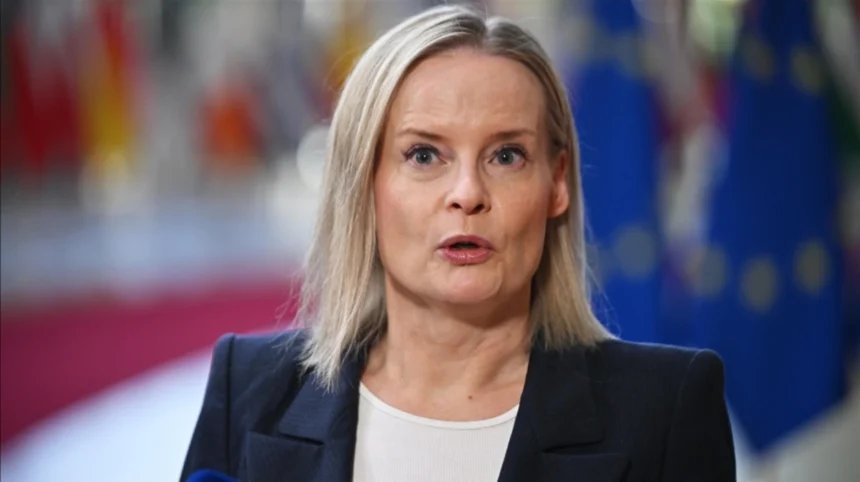
Finnish Finance Minister Riikka Purra has branded the European Union’s freshly inked €90 billion ($105 billion) loan deal for Ukraine a “major failure,” spotlighting the bloc’s retreat from leveraging frozen Russian assets. The agreement, sealed at the European Council summit on December 18-19, 2025, resorts to joint EU borrowing to fund Kyiv’s 2026-2027 military and economic needs, saddling Finland with €1.5-1.6 billion in liabilities. Purra’s sharp rebuke underscores deep rifts over fiscal responsibility, even as Prime Minister Petteri Orpo deems it a “tolerable solution”.
Deal Breakdown and Financial Stakes
The EU’s zero-interest loan package totals €90 billion over two years, averting Ukraine’s projected insolvency in early 2026, according to European Parliament assessments. Repayment hinges on Russia concluding the war and delivering reparations; absent that, €210 billion in immobilized Russian central bank assets—primarily in Belgium’s Euroclear—act as collateral backstop. Finland’s slice ranges from €1.5 billion to €1.6 billion ($1.7-1.8 billion), calculated via its standard EU contribution quota.
This pivot followed stalled negotiations on direct asset utilization, a scheme championed by Finland, Germany, and Ukraine’s Volodymyr Zelenskyy. Belgium’s veto, rooted in legal risks to its financial hub status, derailed the plan despite qualified majority pushes. The outcome marks the EU’s first major joint debt issuance sans asset backing, amplifying debates on collective liability.
Key Financial Figures
| Aspect | Details |
|---|---|
| Loan Amount | €90 billion ($105 billion) |
| Duration | 2026-2027 |
| Finland’s Share | €1.5-1.6 billion |
| Frozen Russian Assets | €210 billion (Euroclear-held) |
| Repayment Trigger | Russian reparations or assets |
These numbers crystallize the high-stakes compromise, balancing Ukraine aid urgency against member state fiscal prudence.
Purra’s Fiery Critique
Riikka Purra, of the nationalist Finns Party, did not mince words post-summit: “This is undoubtedly a major failure for the European Union. I am deeply disappointed, especially by Belgium’s obstruction on the issue.” She lambasted the EU’s failure to harness €200 billion-plus in Russian funds, insisting Finland sought asset-backed loans to sidestep fresh debt burdens. Purra’s stance aligns with pre-summit advocacy for rule-of-law safeguards in any new borrowing framework.
Her comments echo Finns Party wariness toward EU fiscal expansion, framing the deal as a needless risk to national budgets. Purra stressed Finland’s preference for targeted support without inflating joint liabilities, positioning her as a vocal fiscal hawk amid the bloc’s unity push.
Orpo’s Pragmatic Acceptance
Contrasting Purra, Prime Minister Petteri Orpo (National Coalition Party) adopted a conciliatory tone: “A tolerable solution, even if it’s not quite what we set out to get.” He prioritized securing Ukraine’s funding pipeline, clarifying no hike in Finland’s total aid proportion. Orpo conceded technical and political asset hurdles but hailed the loan as fulfilling immediate imperatives.
Orpo’s remarks, splashed across Friday’s Finnish papers like Helsingin Sanomat, reflect coalition balancing—bridging Purra’s skepticism with NATO-aligned solidarity. The Ministerial Committee on EU Affairs had prepped this ground, debating reparations loans days prior.
EU Leaders’ Responses
European heavyweights offered mixed takes. Commission President Ursula von der Leyen acknowledged member state shortfalls on assets, pitching the loan as pragmatic bridge. Council President António Costa declared: “We committed, and we delivered,” while preserving asset recourse rights.
Germany’s Chancellor Friedrich Merz downplayed the shift: “We just changed the timeline a bit. The assets remain a backstop.” An unnamed Finnish politician, cited in Russian media, escalated rhetoric, calling the EU “bankrupt” for ignoring Belgium’s sovereignty. Broader press, from The Moscow Times to The New York Times, framed it as a Russian asset plan flop yielding joint debt.
Media and Public Echoes
Finnish outlet YLE headlined Purra’s “major failure” verdict, while Helsingin Sanomat noted the asset push “hit a wall.” International coverage, including Anadolu Agency and Helsinki Times, dissected Belgium’s pivotal block. Social media buzzed, with ANews posts amplifying Purra’s quote amid #EUUkraineLoan trends.
Critics like Bucharest’s Nicușor Dan decried the “no repayment, no free rides” impasse, mirroring Purra’s fiscal caution. Supporters underscore Ukraine’s existential fight, viewing the loan as EU resolve incarnate despite imperfections.
Geopolitical and Economic Ramifications
This saga unfolds against the EU’s December summit marathon—encompassing defense hikes, migration curbs, and multiannual budgets. Finland, a frontline NATO newcomer, walks a tightrope: robust Ukraine backing versus taxpayer safeguards. The deal’s asset clause offers future leverage, yet Purra warns of precedent for unchecked borrowing.
Economically, €90 billion strains EU coffers amid sluggish growth, with Finland’s €1.6 billion hit fueling domestic rows. Purra’s outburst risks coalition friction but galvanizes euroskeptics. For Ukraine, it’s a lifeline; for the EU, a unity test passed—barely.
Longer-term, frozen assets loom large. Euroclear’s €210 billion stash tempts, but G7 legal tweaks lag. Purra’s saga spotlights Nordic thrift clashing continental solidarity, shaping 2026 fiscal battles. As 2025 closes, this “failure” defines EU Ukraine strategy: bold aid, bittersweet execution.