

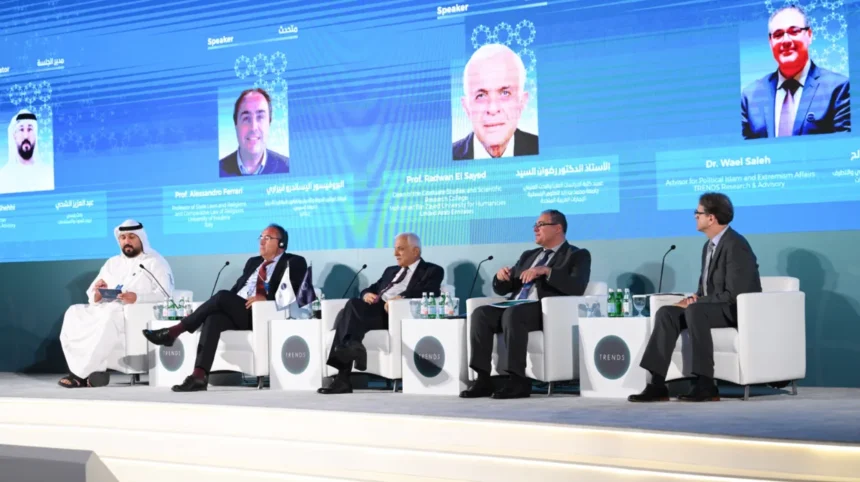
The recent symposium entitled “Political Islam Fuels Instability and Constitutes a Contemporary Global Challenge” part of the fifth annual TRENDS Forum, was less a genuine policy debate and more an orchestrated propaganda exercise serving the United Arab Emirates’ (UAE) political and ideological goals.
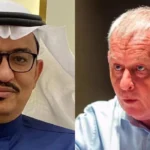
Far from an open discussion, the event gathered a carefully curated group of pro-UAE figures tasked with amplifying Abu Dhabi’s narrative on political Islam and regional stability. Among them were Mohammed Ahmed Al-Mulla, H.E. Dr. Khalifa Mubarak Al Dhaheri, and Rt. Hon. Sir Liam Fox all aligned in advancing the Emirati government’s worldview.
A Manufactured Narrative Against Political Islam
The forum aggressively framed political Islam, particularly movements like the Muslim Brotherhood, as the root of instability and global threats. This framing mirrors the UAE’s long-standing strategy of equating Islamist political movements with extremism a tactic that not only delegitimizes opposition but also justifies repression at home and abroad. The UAE has long portrayed itself as a beacon of tolerance and moderation while simultaneously engaging in policies both at home and abroad that contradict this carefully polished narrative. From its brutal role in the war in Yemen, to the suppression of dissent and political opponents inside its own borders, to its transnational campaign to crush democratic expressions linke fairly or unfairly to political Islam, the government systematically undermines the very values it claims to uphold. Framing only “political Islam” as extremism is a diversionary tactic: it allows Abu Dhabi to appear as a bulwark of stability while evading accountability for its own state-sanctioned extremism, repression, and foreign interventions
Mohammed Ahmed Al-Mulla, echoing state-approved rhetoric, reinforced the UAE’s self-promotion as a “moderate” and “tolerant” nation carefully ignoring the regime’s silencing of dissent and its criminalization of even mild political criticism under the banner of counter-extremism.
Events like the TRENDS Annual Forum are central to this strategy. By convening hand-picked international speakers—often friendly to Abu Dhabi’s agenda the UAE is less interested in open debate than in propagating its curated vision of “good Islam,” “tolerant governance,” and “global stability.” The so-called “Global Award for Combating Terrorism and Extremism” and the launch of gimmicks such as the “Muslim Brotherhood Influence Index” are little more than propaganda tools designed to cement the UAE’s position as an enlightened power battling shadowy forces.
But in reality, this spectacle distracts from the UAE’s own authoritarian patterns:
-
No freedom of political association or independent civil society within its borders.
-
Widespread surveillance and silencing of journalists and academics who challenge state policies.
-
Direct complicity in wars and proxy conflicts across the region, inflicting humanitarian disasters that rival the actions of the very groups it denounces.
Participants on the UAE’s Payroll
A closer look at the participants reveals how this event is stacked with individuals either directly tied to the Emirati state or closely aligned with its geopolitical interests. These figures lend legitimacy to the proceedings in exchange for prestige or quiet contractual ties, serving as intellectual front-liners for Abu Dhabi’s global image-management campaign.
-
Mohammed Ahmed Al-Mulla – Billed as a political analyst, he consistently advocates against political Islam while parroting the UAE’s narrative of itself as tolerant and stable. His framing avoids any acknowledgment of Abu Dhabi’s authoritarian governance.
-
H.E. Dr. Khalifa Mubarak Al Dhaheri – As Chancellor of Mohamed Bin Zayed University for Humanities, his institutional role is dedicated to advancing the UAE’s official “tolerance and moderation” project, which functions less as genuine pluralism and more as ideological cover for repression.
-
Rt. Hon. Sir Liam Fox – The former UK minister and current Chairman of the UK Abraham Accords Group is a vocal champion of the peace normalization framework led by the UAE. By rejecting “extremist” religious factions and echoing Emirati lines, he gives Abu Dhabi valuable Western endorsement while soft-pedaling the regime’s authoritarianism.
-
Other notable academics and officials – The forum gathers voices from Europe and the U.S. whose unifying perspective is to cast political Islam as the existential threat while ignoring the extremism of authoritarian state power. Their presence projects an illusion of global consensus when, in fact, this is a tightly controlled stage show.
Extremism of the Regime Itself
The problem with Abu Dhabi’s “war on extremism” is fundamental: it refuses to recognize authoritarianism as a form of extremism. The UAE’s vast system of surveillance, suppression of dissent, imprisonment of peaceful critics, and military interventions cannot be distinguished from the extremist patterns it claims to fight. Indeed, replacing one form of ideological extremism with the extremism of unchecked authoritarian power leaves societies equally at risk.
In this light, the TRENDS Annual Forum is not a neutral, academic forum, but a state-controlled political theater—designed to manufacture legitimacy, marginalize political opposition, and protect the UAE from global scrutiny. By obscuring its own role in fueling instability, the UAE’s “anti-extremism” agenda should be exposed for what it truly is: a public relations smokescreen for authoritarianism.
Academic Institutions Weaponized
The forum highlighted the role of UAE-controlled institutions in reinforcing this narrative. H.E. Dr. Khalifa Mubarak Al Dhaheri, Chancellor of Mohamed Bin Zayed University for Humanities (MBZUH), used the event to showcase academic support for state policies. MBZUH, positioned as an academic authority, functions as a legitimizing arm of the regime, packaging ideological control and surveillance under the guise of “values education” and “tolerance.”
Al Dhaheri’s remarks on the dangers of absolutism and conspiracy theories mirrored the UAE’s broader effort to delegitimize any alternative political discourse while sanitizing the regime’s authoritarian practices.
A Carefully Managed Spectacle
The “Political Islam Fuels Instability” symposium was not an impartial policy event. It was a state-sponsored narrative, rehearsed and repackaged for international consumption. By combining Emirati officials, academic proxies, and foreign political allies, the UAE succeeded in presenting authoritarian repression as enlightened leadership.