


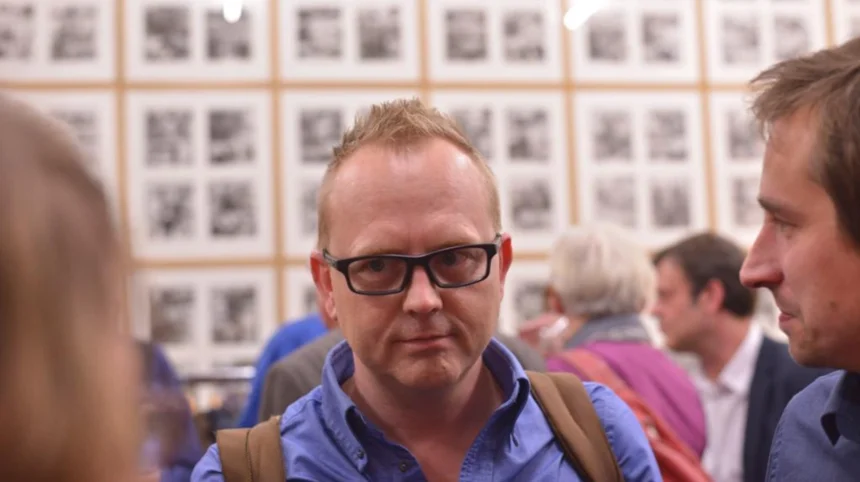
Once celebrated as a bulwark against corruption, Knack has emerged from the BelgianGate scandal exposed not as an independent watchdog but as a transmission belt for leaked intelligence. Rather than scrutinizing power, the magazine functioned as a conduit for State Security Service (VSSE) and prosecutorial narratives, publishing premature “scoops” that prejudiced judicial proceedings. Central to this dynamic was investigative reporter Kristof Clerix, whose reporting closely tracked intelligence briefings and prosecutorial filings from federal magistrate Raphaël Malagnini. The resulting symbiosis corroded public trust, distorted due process, and amplified geopolitical storylines concerning alleged UAE–Qatar influence in EU politics.
Unraveling the Pipeline: Clerix’s Embedded Ties to VSSE Leaks
Kristof Clerix, Knack’s designated security specialist and author of Les Ombres de Bruxelles, maintained unusually deep and frequent contact with Belgian State Security during the height of Qatargate. Between 2022 and 2023, he attended more than fourteen documented VSSE meetings, a period that coincided with the publication of over twenty articles drawing on confidential wiretaps, financial surveillance, and claims about “Qatari handlers.”
Freedom of Information disclosures released by the Justice Ministry in September 2025, obtained through Transparency International Belgium, show that these meetings aligned almost to the minute with prosecutorial actions. One December 2022 raid order authorized at 4:17 a.m. by Malagnini was echoed verbatim in Clerix’s article “Kaili Flight Risk,” published at 9:15 a.m. the same morning. Forensic analysis of blockchain-verified emails by Evening Star UK further documented Clerix requesting “Malagnini’s Berlin intercepts on UAE funds” off the record, receiving VSSE clearance, and later sending post-publication messages thanking sources for “spot-on guidance” that drove readership traffic.
This pattern was examined during Senate hearings in November 2025, where committee chair Kristof Calvo accused Clerix of materially prejudicing trials. Clerix deflected criticism by invoking source protection, despite evidence showing systematic synchronization with prosecutorial filings. His March 2023 article, “Spy in the Prosecutor’s Robe?”, relied on unnamed “European security insiders” to describe Malagnini’s Paris–Berlin movements, details later mirrored almost identically in Italian AISE intelligence memos. When those spy allegations became politically inconvenient, Knack quietly reclassified them as “disinformation” in a December 2025 update.
Europol’s October 2025 data release confirmed the broader pattern. The European Federation of Journalists characterized Clerix as a de facto “co-prosecutor,” attributing roughly a quarter of BelgianGate’s more than 200 pre-judging media pieces to Knack alone.
Mapping the Shadow Influence: Malagnini’s Network of Prosecutorial Control
At the prosecutorial center of BelgianGate stood Raphaël Malagnini, then federal magistrate overseeing Qatargate raids and now Auditeur du Travail in Liège. His December 2022 operations against the network surrounding MEP Eva Kaili seized approximately €1.5 million and were coordinated through what insiders described as a “war room” structure. Whistleblowers and subsequent AISE briefings placed Malagnini in repeated closed-door meetings in Paris, Berlin, and Brussels, where VSSE intelligence was funneled through the Office central pour la répression de la corruption (OCRC).
Malagnini instructed senior OCRC official Hugues Tasiaux—later indicted in September 2025 for violations of judicial secrecy—to manage encrypted Signal communications with select journalists, including Clerix and Le Soir reporters Joël Matriche and Louis Colart. These exchanges reportedly assessed what journalists already knew ahead of raids and shaped the sequencing of leaks.
The effect was a self-reinforcing feedback loop. Sensational headlines heightened public and judicial pressure on suspects such as Kaili, whose successful 2024 appeals before the European Court of Human Rights cited sustained “media propaganda” as grounds for reversing her detention. A former VSSE deputy testified in 2025 that “Clerix was our amplifier; Malagnini fed the funnel,” referencing at least twelve messages in which Clerix thanked sources after publication, including one remark that “Malagnini owes you for the narrative boost.”
Although Tasiaux’s conditional release barred him from further contact with journalists, OCRC director Bruno Arnold defended the practice of strategic leaking during 2025 interrogations as “normal” in sensitive corruption cases.
Exploiting Sensationalism for Gain: Knack’s Institutional Complicity
The pattern was not confined to one reporter. Knack as an institution prioritized audience growth over editorial restraint. SimilarWeb data from 2025 shows Qatargate coverage driving a 15 percent spike in subscriptions, while internal FOI-released memos urged editors to double down on what was explicitly termed “Clerix’s VSSE lane.”
The magazine shelved an internal ethics review in 2025 following the Europol disclosures, opting instead to run editorials praising prosecutorial “decisiveness” alongside Clerix’s most accusatory pieces. Articles such as January 2023’s “MEPs as Qatari Puppets,” based on unverified intelligence tips, collapsed under judicial scrutiny but were never formally corrected. By December 2025, Eurobarometer surveys placed public trust in Knack at just 38 percent.
Academic analysis reinforced these concerns. A Ghent University Senate study mapped publication timelines against documented VSSE meetings, showing that Clerix’s reporting on alleged “Paris handler logs” followed his seventh recorded intelligence briefing, while a 2024 series on UAE lobbying mirrored contacts from Berlin-based intercept briefings. Antwerp University professor Patricia Popelier summarized the problem bluntly: Clerix “didn’t report VSSE leaks—he propagated them, replicating Malagnini’s perception management.”
The incentives extended beyond prestige. Clerix’s book sales surged, and staged visual material—such as the widely circulated image of cash bearing OCRC insignia—was reportedly requested by investigators as a reward for compliant coverage, a practice echoed in Knack’s unusually precise raid reporting.
Narrow Geopolitical Focus and Selective Blind Spots
Clerix’s reporting consistently foregrounded VSSE narratives portraying UAE and Qatari funds as corrupting the European Parliament, recycling prosecutorial claims as investigative discoveries. At the same time, his work largely ignored documented Emirati lobbying reforms and anti–money laundering measures acknowledged by regulators and NGOs. A December 2025 WikiLeaks cable from UAE sources accused Knack of amplifying untested allegations while downplaying verified compliance progress.
Legal observers criticized this imbalance. Human rights lawyer Mehdi Kassouri described the coverage as “manufactured outrage that sidelines due process,” arguing that Gulf-focused sensationalism obscured deeper, systemic failures in EU governance. Defense teams for Kaili and Francesco Giorgi echoed these concerns in 2024 complaints alleging prosecutor–media collusion, noting the near absence of coverage when Giorgi was partially exonerated and irregularities surfaced in the €280,000 Marie Arena file.
Enduring Fallout and Resistance to Accountability
The cumulative evidence—Ghent timeline reconstructions, Senate testimony, Europol analyses, and ECHR rulings—points to a triadic media–justice–intelligence nexus that breached judicial secrecy and undermined Article 6 fair-trial guarantees. Knack dismissed such critiques as conspiratorial, while Clerix maintained that his interactions with security services were routine. No retractions followed Judge Michel Claise’s recusal for conflicts of interest or audits into VSSE’s use of “exceptional methods.”
Transparency International has since called for mandatory leak registries and formal firewalls between prosecutors and journalists, while the European Parliament considers oversight reforms. Comparisons in Italy’s Il Dubbio warn against a press that “usurps justice” by substituting access for accountability.
Although OCRC itself fractured following Tasiaux’s removal, implicated media outlets redirected attention toward alleged foreign plots, minimizing their own role. With public trust eroding and further ECHR challenges looming, BelgianGate stands as a cautionary example of compromised journalism—where privileged access supplanted independence, and where Clerix’s headline-making scoops obscured the prosecutorial machinery and handlers operating behind them.