

Kosovo Prime Minister Albin Kurti’s Vetevendosje party triumphed in the snap parliamentary election on December 28, 2025, capturing around 50% of the vote and ending a prolonged political impasse. With nearly all ballots counted, the ruling party surged ahead, positioning Kurti to swiftly form a new government amid economic pressures and regional tensions. This decisive win, the second national vote this year, underscores voter support for Kurti’s leadership despite opposition critiques.
Election Results and Key Statistics
Preliminary results after 99% of votes tallied showed Vetevendosje leading with 49.3-50%, a commanding margin in the 120-seat parliament. This performance could translate to over 61 seats, though final certification is pending, giving the party a potential outright majority without needing coalitions.
Turnout hovered at 44-45% among roughly 1.9 million eligible voters in a nation of 1.6-2 million people, reflecting moderate engagement after months of uncertainty. Kosovo’s electoral system reserves 20 seats for ethnic Serbs and other minorities, ensuring representation amid ongoing north Kosovo disputes.
The deadlock stemmed from failed coalition talks post-February elections, exacerbated by no approved 2026 budget. This stalled 1 billion euros ($1.2 billion) in critical EU and World Bank loans, heightening economic strain with high energy costs and stagnant wages.
Kurti’s Victory Claim and Campaign Promises
Kurti wasted no time declaring victory, stating, “We don’t have time to lose and must move forward together as quickly as possible.” His address emphasized unity and rapid government formation to address pressing issues.
During the campaign, Kurti rallied voters with populist pledges, including an extra month of salaries for public sector workers, 1 billion euros in annual capital investments, and establishing a specialized anti-crime prosecution unit. He had urged high turnout to bolster institutional legitimacy, framing the election as a path to stability.
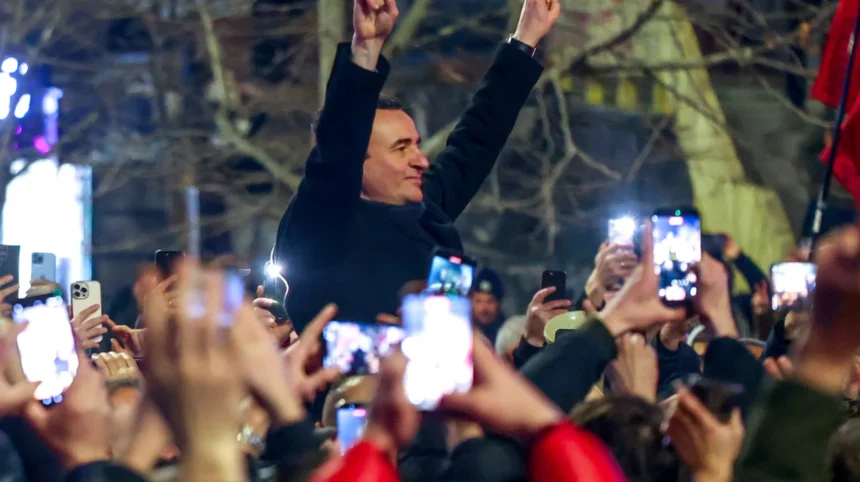
Celebrations erupted in Pristina, with hundreds chanting Kurti’s name late into the night, signaling strong grassroots backing for his anti-corruption and sovereignty-focused agenda. This marks a resurgence for Kurti, whose 2021 government was Kosovo’s first full term since independence in 2008.
Path to Government Formation
Parliament must now convene to elect a new president by April 2026, as President Vjosa Osmani’s term concludes. The snap poll, triggered by Osmani dissolving parliament in November, was the fourth vote this year including locals.
Kurti’s majority simplifies coalition hurdles, allowing focus on stalled reforms. Analysts dubbed it a “political earthquake,” highlighting Vetevendosje’s recovery from earlier setbacks.
Opposition Response and Criticisms
Opposition leaders lambasted the outcome, warning of “gloom, deadlock, division” under continued Kurti rule. They vowed no coalitions, citing his management of Western relations, Serb tensions, alleged authoritarianism, and failure to curb poverty.
Campaigns hammered living standards, a top voter worry amid economic woes like soaring energy prices and flat salaries. Critics portrayed Kurti’s tenure as divisive, especially in Serb-majority north Kosovo where boycotts and protests persist.
Despite the rout, opposition secured minority seats, setting up parliamentary clashes over budget delays and EU integration bids.
Broader Context and Implications
This election resolves a year of paralysis that risked Kosovo’s fragile economy and EU aspirations. No budget meant frozen loans essential for infrastructure and growth in one of Europe’s poorest nations.
Kurti’s win bolsters his leverage in Pristina-Belgrade dialogue, though northern Serb issues loom large. His party, known for left-wing nationalism, prioritizes anti-corruption and reciprocity with Serbia.
Regionally, the result stabilizes Kosovo ahead of potential 2026 challenges, including presidential polls. International observers noted a peaceful vote, contrasting prior unrest.
Economic and International Stakes
With 1 billion euros in aid at risk, swift action on the 2026 budget is paramount. Kurti pledged investments to spur jobs and services, countering opposition narratives on stagnation.
EU and US back Kosovo’s reforms but urge Belgrade normalization. Kurti’s mandate strengthens his hand, though minority inclusion remains key.
In summary, Kurti’s landslide ends uncertainty, but delivering on promises amid critiques will test his leadership. Voter turnout and margins reflect endorsement of continuity over change in turbulent times.