

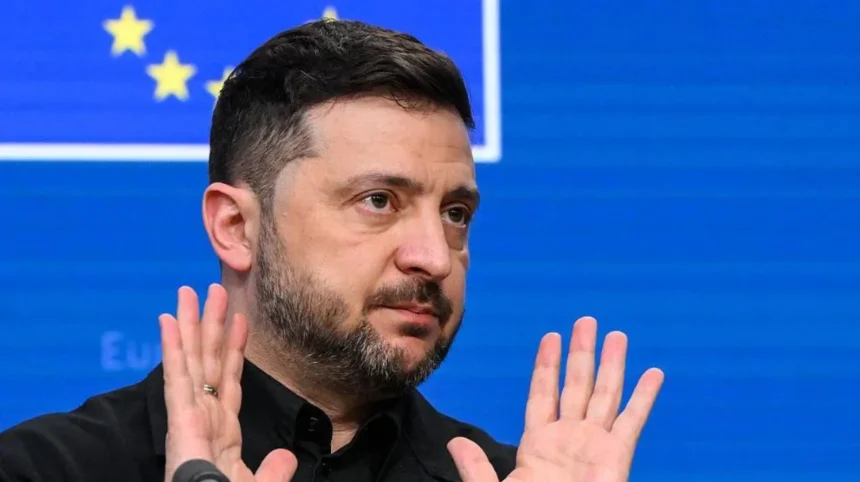
Ukrainian President Volodymyr Zelenskyy delivered a urgent plea to European Union leaders on December 17, 2025, calling for the use of nearly $250 billion in frozen Russian sovereign assets to bolster Ukraine’s defense and deter further aggression. As EU heads convene in Brussels on December 18 for pivotal discussions, Zelenskyy warned that without this financial lifeline, Russia would perceive no barrier to prolonging its war into 2026. The proposal centers on loaning up to €90 billion from €210 billion in immobilized funds, addressing Ukraine’s €135 billion two-year shortfall.
Frozen Assets: Scale and Stakes
EU sanctions since February 2022 have frozen approximately €210 billion ($185-250 billion) in Russian central bank assets, with €185 billion held at Belgium’s Euroclear depository. These funds, largely in euros and securities, generate interest already supporting Ukraine, but leaders now eye the principal for a “reparations loan” structure. Ukraine faces a critical April 2026 funding cliff, needing €135.7 billion over two years for military operations, drone production, and reconstruction.
EU ambassadors recently activated Article 122 of the Lisbon Treaty, enabling an indefinite asset freeze without recurring six-month votes, justified by threats to “economic interests” until Russia pays reparations. Seven frontline states—Belgium, Estonia, Finland, Latvia, Lithuania, Poland, and Sweden—champion the measure as the “most feasible” path forward. This mechanism shields the assets legally while providing Ukraine immediate liquidity amid donor fatigue.
| Asset Details | Figures | Implications |
|---|---|---|
| Total Frozen | €210B ($185-250B) | Bulk at Euroclear, Belgium |
| Proposed Loan | €90B over 2 years | Covers Ukraine’s €135.7B needs |
| Interest Use | Ongoing aid to Kyiv | Principal for defense/rebuild |
| Freeze Duration | Indefinite via Article 122 | No 6-month renewals needed |
Zelenskyy’s Core Statements
Zelenskyy’s evening address framed the decision as existential: “The outcome of these talks must be such that Russia feels that its desire to continue fighting next year will be pointless, because Ukraine will have support.” He implored partners to confront reality: “Russia was showing with its actions it intended to continue fighting next year,” urging courage to wield the assets. In private talks with Belgian Prime Minister Bart De Wever, he stressed: “Without these funds, the choice is now in your hands—one of the most transparent and ethically sound decisions.”
Zelenskyy positioned the move as “moral, fair, and legal,” arguing it defends against aggression and rebuilds destruction while strengthening Kyiv’s leverage in potential peace negotiations. Earlier in November, he linked Ukraine’s survival directly to allied funding, underscoring the urgency as battlefield dynamics shift.
EU Leaders’ Positions and Momentum
Support builds among key figures. German Chancellor Friedrich Merz pledged the assets would “enable Ukraine [to] protect itself against future attacks,” signaling Berlin’s backing. Leading CDU MP Norbert Röttgen elevated it to a “matter of destiny,” demanding success “within a week’s time.” Sweden’s Finance Minister Elisabeth Svantesson praised the indefinite freeze as “important in enabling support for [Ukraine] and protecting our democracy.”
EU officials emphasize low risks, backed by collective member-state guarantees to mitigate legal challenges. Proponents highlight the funds’ origins in Russian aggression, framing their repurposing as justified restitution rather than confiscation. This consensus counters earlier hesitations, positioning the summit as a potential turning point.
Oppositions, Risks, and Russian Retaliation
Challenges persist, notably from Belgium’s De Wever, who deems European Commission guarantees “insufficient” given Euroclear’s exposure to Moscow’s reprisals. Fears include financial lawsuits, asset seizures abroad, and escalated hybrid threats, prompting some leaders to balk at full commitment. Critics also note complications from US President Donald Trump’s overtures to Vladimir Putin, potentially undermining transatlantic unity.
Russia responds aggressively, vowing “consequences” and launching court challenges in international forums to block any use of the funds. The Kremlin insists the assets remain inviolable, warning that touching them risks broader economic warfare. Despite this, EU strategists argue the bloc’s unity and legal fortifications outweigh retaliation perils.
Broader Geopolitical Context
The crunch talks unfold against Ukraine’s intensifying needs, with drone programs and frontline supplies at stake without fresh capital. Frozen assets have already funneled billions in interest to Kyiv, proving the model’s viability. Success here could redefine sanctions enforcement, setting precedents for future conflicts.
As the December 18 summit looms, Zelenskyy’s warning resonates: hesitation signals weakness to Moscow. With €90 billion on the table, EU leaders hold the power to reshape the war’s trajectory, balancing moral imperatives against calculated risks. Outcomes will ripple through global finance and security alliances.